

How to Keep Your Home Organized With a Busy Schedule
Keeping a home organized can feel like an endless responsibility when work, family commitments, errands, and everyday routines already fill most of your schedule. You may spend part of the weekend putting everything away, only to find the kitchen counters covered, shoes scattered near the door, and laundry piling up again a few days later. The problem isn't always a lack of effort or motivation, but an organizational system that demands more time and attention than your household can realistically provide. A home that stays reasonably organized usually depends on simple, easy-to-repeat habits rather than occasional hours of intense cleaning. This means creating convenient places for everyday belongings, reducing unnecessary steps, and making small adjustments that prevent clutter from collecting in the first place. You do not need to organize every drawer or clear every closet to notice an improvement in how your home functions. Instead, start with the areas that create the most frustration and look for ways to make them easier to manage. Learning how to keep your home organized with a busy schedule can help reduce the amount of time spent tidying while making daily routines more comfortable. The goal is a home that supports your lifestyle without requiring every weekend to become another cleaning project.
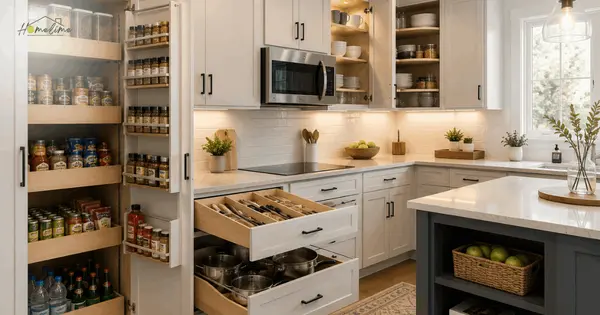
Most homes have a few predictable areas where belongings accumulate throughout the week. Kitchen counters often collect mail, reusable bags, small appliances, and items waiting to be returned to another room. Entryways can become crowded with shoes, jackets, backpacks, keys, and packages because everyone passes through them several times a day. Rather than repeatedly clearing these spaces without changing anything, consider why those belongings end up there in the first place. If shoes regularly pile up beside the front door, adding an accessible shoe rack or assigning each person a designated space may be more effective than constantly reminding everyone to put them away. A small tray for keys, a basket for incoming mail, or hooks for frequently used bags can prevent several everyday items from spreading across nearby surfaces. The kitchen may benefit from a dedicated drawer for miscellaneous essentials so they remain accessible without occupying valuable counter space. Keep storage locations close to where items are naturally used because complicated systems are less likely to become lasting habits. The easier it is to put something away, the less likely it is to become part of a growing pile.
Maintaining an organized home becomes more manageable when tidying is connected to activities you already complete each day. Instead of setting aside several hours every weekend, try returning a few items to their places while waiting for dinner to cook or preparing for bed. Clearing the kitchen counter after meals, putting shoes away when entering the house, and returning laundry to drawers can prevent small tasks from becoming larger projects. These habits do not need to take much time, but they work best when everyone in the household understands where belongings belong. Consider keeping a small basket for items that need to be returned to other rooms, then emptying it during a regular trip through the house. This can be particularly helpful in homes with children, where toys, books, and school supplies often move between different spaces. Another useful approach is to address one small area at a time instead of trying to organize an entire room whenever clutter appears. Spending a few minutes clearing a bathroom counter or sorting the contents of a drawer can create progress without interrupting the rest of your day. Consistent, manageable habits are generally easier to maintain than a complicated routine that requires more energy than you have available.
Sometimes the biggest obstacle to staying organized is simply having more belongings than your available storage can comfortably accommodate. When cabinets are packed, closets are overflowing, and drawers barely close, putting things away becomes frustrating even when you know exactly where they belong. This does not mean you need to get rid of everything or adopt an unusually minimal lifestyle. Instead, pay attention to the items that regularly get in the way and decide whether they still serve a useful purpose. Clothing that no longer fits, duplicate kitchen tools, unused decorations, and broken household items can gradually occupy space that would be better used for everyday essentials. You can address these categories in small amounts whenever you naturally encounter them rather than scheduling a major decluttering session. When putting away laundry, for example, set aside clothing you no longer wear instead of returning it to an already crowded drawer. Before buying additional organizers, consider whether removing unnecessary items would solve the storage problem without introducing more containers. Keeping belongings at a manageable level makes existing organization systems easier to maintain and reduces the amount of work required to keep your home comfortable.
An organized home does not require constant cleaning, perfectly arranged cabinets, or an entire weekend dedicated to decluttering. It requires practical systems that fit your household's routines and make everyday belongings easy to put away. Start by identifying the areas where clutter repeatedly collects, then create simple storage solutions that address the reasons those spaces become crowded. Small daily habits can prevent messes from growing while allowing you to spend less time catching up on household tasks. It also helps to keep the number of belongings manageable so your existing storage can function as intended. Remember that a comfortable home does not need to look perfectly arranged at every moment, especially when people are actively living, working, and spending time together. Focus on improvements that make daily life easier rather than trying to maintain an unrealistic standard of organization. Over time, small changes can create a home that feels more manageable without requiring constant attention. If you are preparing to buy or sell a home, a knowledgeable local real estate professional can also help you think about storage, layout, and functionality when evaluating your options.
Recent Posts



GET MORE INFORMATION
